
- by
- 05 23, 2024
-

-
-
Loading
Loading
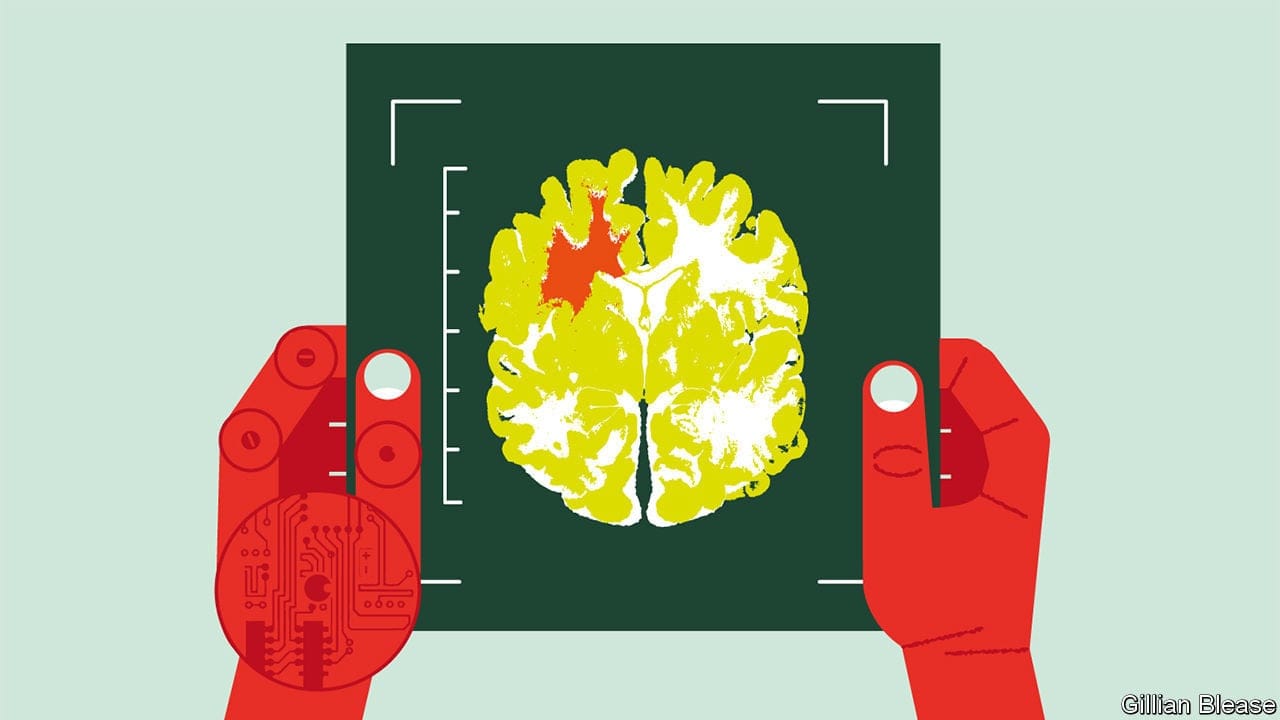
RADIOLOGISTS, say the pessimists, will be first against the wall when the machines take over. Analysing medical images is a natural fit for “deep learning”, an artificial-intelligence (AI) technique which first attracted attention for its ability to teach computers to recognise objects in pictures. A variety of companies hope that bringing AI into the clinic will make diagnosis faster and cheaper. The machines may even be able to see nuances that humans cannot, assessing how risky a patient’s cancer is simply by looking at a scan.Some AI researchers think that human beings can be dispensed with entirely. “It’s quite obvious that we should stop training radiologists,” said Geoffrey Hinton, an AI luminary, in 2016. In November Andrew Ng, another superstar researcher, when discussing AI’s ability to diagnose pneumonia from chest X-rays, wondered whether “radiologists should be worried about their jobs”. Given how widely applicable machine learning seems to be, such pronouncements are bound to alarm white-collar workers, from engineers to lawyers.


