
- by
- 05 23, 2024
-

-
-
Loading
Loading
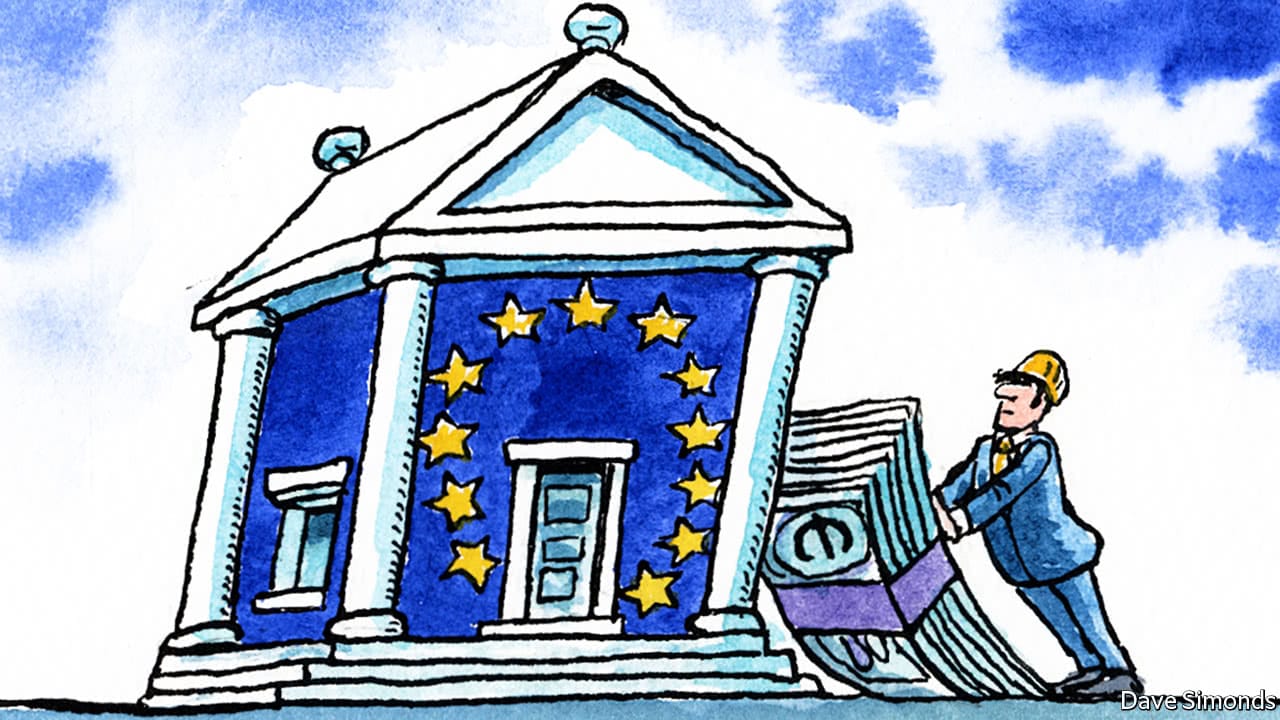
THE permanent revolution rumbles on. Ten years after the financial crisis, Europe’s bankers must wonder whether the regulatory upheaval will ever cease (see ). Next month two European Union directives start to bite. MiFID2 will make trading more transparent and oblige banks to charge clients separately for research; PSD2 will expose banks to more competition from technology companies, and each other, in everything from payment services to budgeting advice. A new accounting rule, IFRS 9, also kicks in, demanding timelier provisions for credit losses. The global capital standards drawn up after the crisis, Basel 3, may at last be on the verge of completion—implying yet another uptick in equity requirements for some European lenders.Amid this blizzard of letters and digits, the European Commission is pushing ahead on yet another front. It is urging governments and the European Parliament to complete the EU’s banking union by 2019 and thus cut the “doom loop”, in which weak banks and sovereigns drag each other down. Because regulators treat all euro-area government bonds, regardless of origin, as risk-free, banks have an incentive to load up on them in order to economise on equity; and they favour their home governments’ bonds. Should the sovereign-bond prices fall, as they did in Greece, local banks take a big hit; if governments have to prop up lenders, the spiral goes on down.


